
Why physical touchpoints are becoming more important again in the digital age
It has never been so easy to be visible online. And it has never been so difficult to really stand out.
.gif)

Startups investieren in Social Media, Performance-Marketing und digitale Kampagnen. Doch zwischen Newsfeeds, Bannern und Push-Nachrichten passiert etwas Entscheidendes: Aufmerksamkeit wird flüchtiger. Gerade deshalb gewinnen physische Touchpoints wieder an Bedeutung.
Ein persönliches Gespräch am Messestand.
Ein kleines Präsent beim Ersttermin.Start-ups invest in social media, performance marketing and digital campaigns. But between news feeds, banners and push messages, something crucial is happening: attention becomes more fleeting. This is precisely why physical touchpoints are becoming more important again.
A personal conversation at the trade fair stand.
A small gift at the first appointment.
A deliberately placed item on the conference table to arouse attention.
What seems inconspicuous can have a surprisingly big impact. In contrast to digital adverts, physical moments are tangible, personal and can be experienced more emotionally.
Small tokens of appreciation trigger positive emotions - and at the same time strengthen the memory of a brand. This is precisely where their potential lies in day-to-day business.
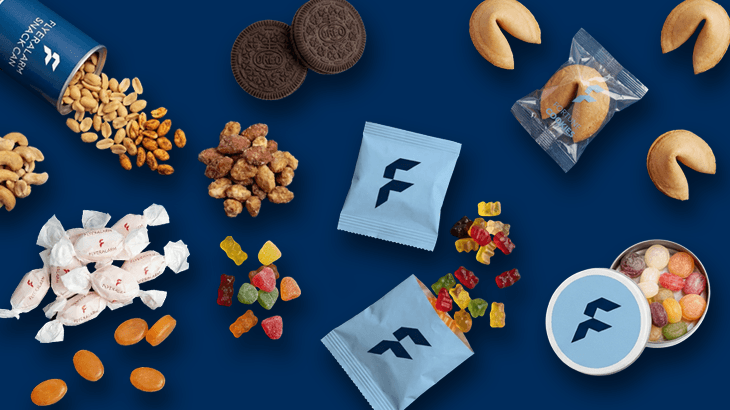
Small snacks or sweets are a particularly simple and widespread touchpoint. They may seem inconspicuous at first glance, but they can have a surprisingly strong effect on attention and the atmosphere of a conversation.
But why do such impulses also work in a modern business context? And how can founders use them strategically instead of simply distributing giveaways?
Why small moments of pleasure increase our attention
Sweet snacks are particularly attractive to many people - and that's no coincidence. For thousands of years, carbohydrate-rich foods were an important source of energy, which is why our brain still reacts positively to them today.
Among other things, eating them releases dopamine, a neurotransmitter associated with reward and positive emotions. Even a small snack can therefore provide a pleasant moment in the short term.
This effect is interesting in marketing because emotion increases attention.
A brief moment of pleasure creates a positive emotional anchor. And this anchor can lead to a conversation being more pleasant, a trade fair stand being visited for longer, or a brand being perceived more favourably.
Of course, sweets are no substitute for a good product or a convincing business idea. But it can make a small difference - right at the moment when people decide whether to take a closer look at a company.
From snack to strategic touchpoint
However, this brief moment of happiness is only the beginning. It only becomes relevant for start-ups when it leads to interaction.
At trade fairs, networking events or initial meetings, it is often not only the product that makes the first impression, but also the atmosphere.
A small snack - whether sweet or savoury - can do several things at once:
- It lowers the inhibition threshold for the first contact
- It extends the dwell time at the stand
- It creates a natural conversation starter
The crucial point: physical giveaways only work sustainably if they are consciously integrated into the brand strategy.
Placing a bowl of anonymous sweets on the counter is rarely enough. In times of permanent sensory overload, every point of contact needs a clear connection to the brand.
This can happen in different ways:
- Branded packaging
- A short, concise claim
- A subtly integrated QR code
- Or a design that matches the brand identity
In this way, a small gift becomes a conscious component of brand communication.
How start-ups use physical touchpoints sensibly
The context determines what kind of attention is appropriate.
1. Meetings and discussions with investors
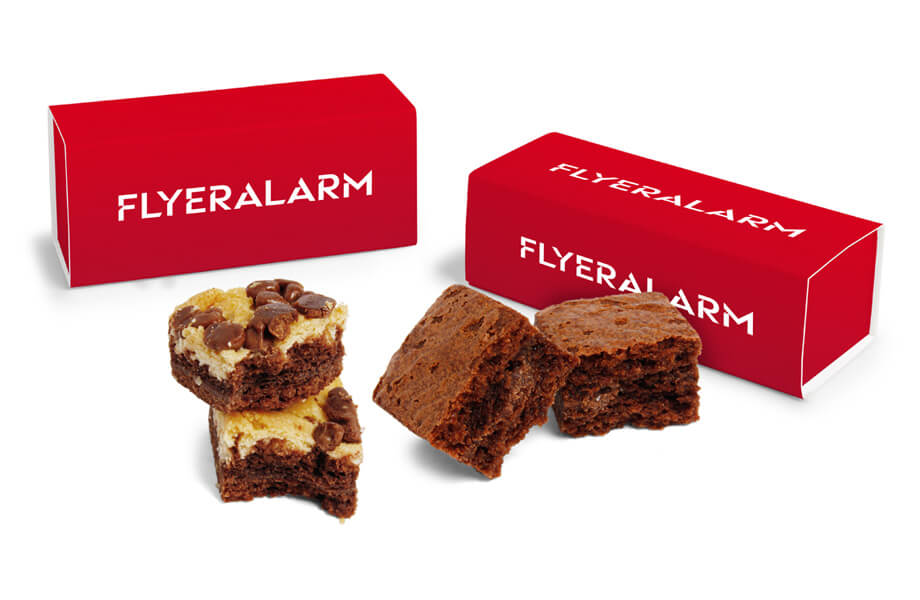
On a small scale, it's not so much the quantity that counts as the detailed effect.
During consultations, pitches or investor meetings, small culinary accompaniments can create a relaxed atmosphere - without being intrusive.
Typical examples are
- High-quality biscuits or pastry specialities
- Discreetly branded sugar sticks with your coffee
Such details look particularly professional if they match the company's positioning. Premium services, for example, benefit more from high-quality specialities than from classic promotional sweets.
This usually applies here: quality beats quantity.
2. Trade fairs & networking events
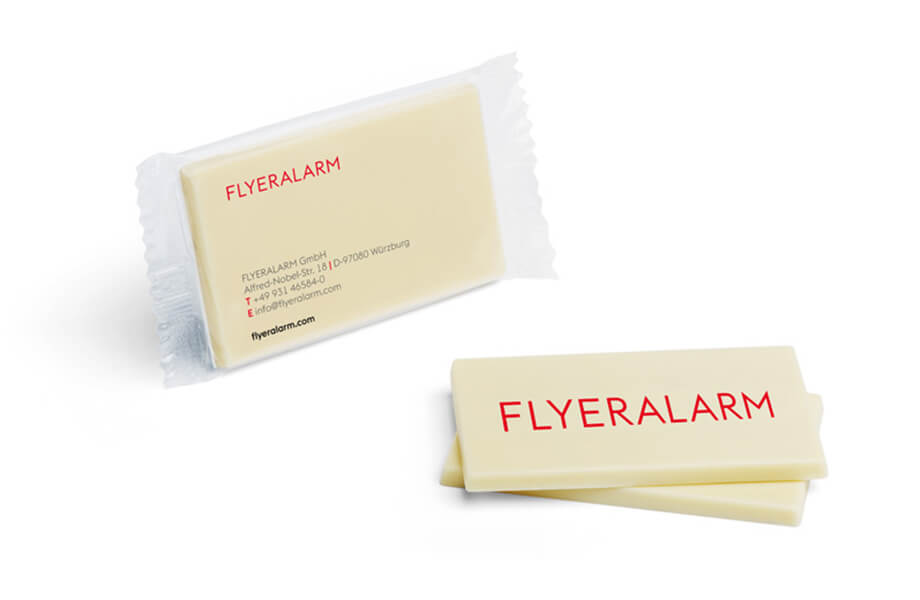
At larger events, the focus is more on visibility and initial contacts.
Snacks can be an easy way to get people to stop for a short time. Products that are easy to take with you and can be consumed quickly are particularly suitable.
A small selection:
- Small sachets of fruit gums
- Your business card as chocolate - an original idea
- Small savoury snacks such as nuts or pretzels
The decisive factor is not variety, but brand fit. A clearly positioned start-up can also be consistent when it comes to giveaways.
A tech start-up, for example, may use minimalist design, while a creative brand is more likely to work with humorous packaging.
3. Functional snacks for long event days
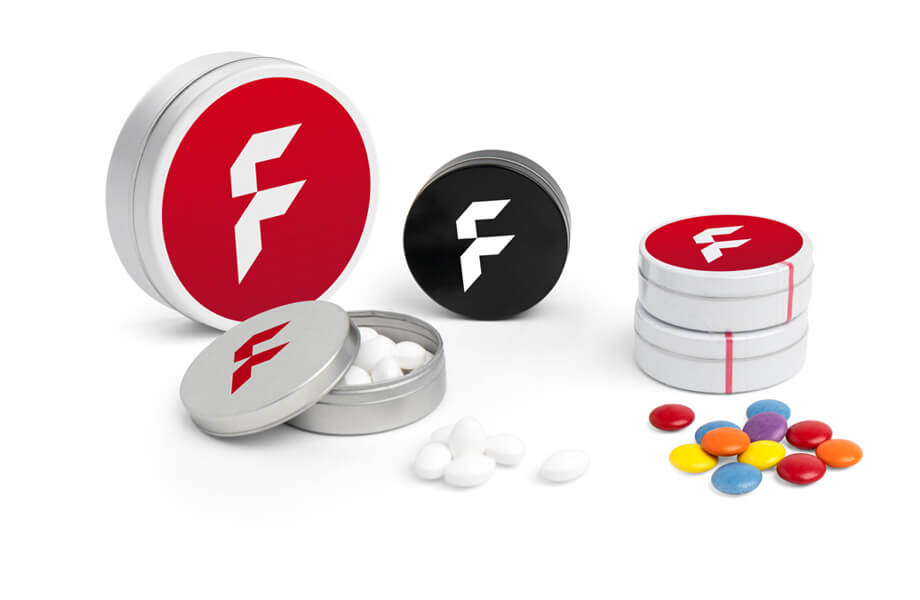
Snacks can also fulfil a practical purpose, especially at conferences.
Here, the focus shifts from "sweet" to functional.
Examples of this are
- Nut mixes or muesli bars as a source of energy
- Dextrose for short bursts of concentration
- Mints or small fresh products
Such giveaways are often particularly appreciated because they offer immediate added value - and are therefore more memorable.
Small impulses, big impact
In the end, it's not about the sweet or the snack itself, but about the experience that accompanies it.
A small moment of pleasure can facilitate the start of a conversation or simply be a pleasant gesture for customers and business partners. Especially in a world full of digital stimuli, such tangible gestures can make a difference
.gif)
More blog posts
In-depth insights, inspiring success stories and practical tips for entrepreneurs - discover more in our other articles.
Swiss proptech storabble expands to Spain with 48 AI agents
.jpg)
Starting a business is a gamble, but you can improve the odds.
.jpg)