
Bootstrapping: What does it mean – and is it worth it?
Six years of growth without investors – what bootstrapping means in practice, what alternatives exist, and why Cohaga raised external capital for the first time in 2026.

.gif)

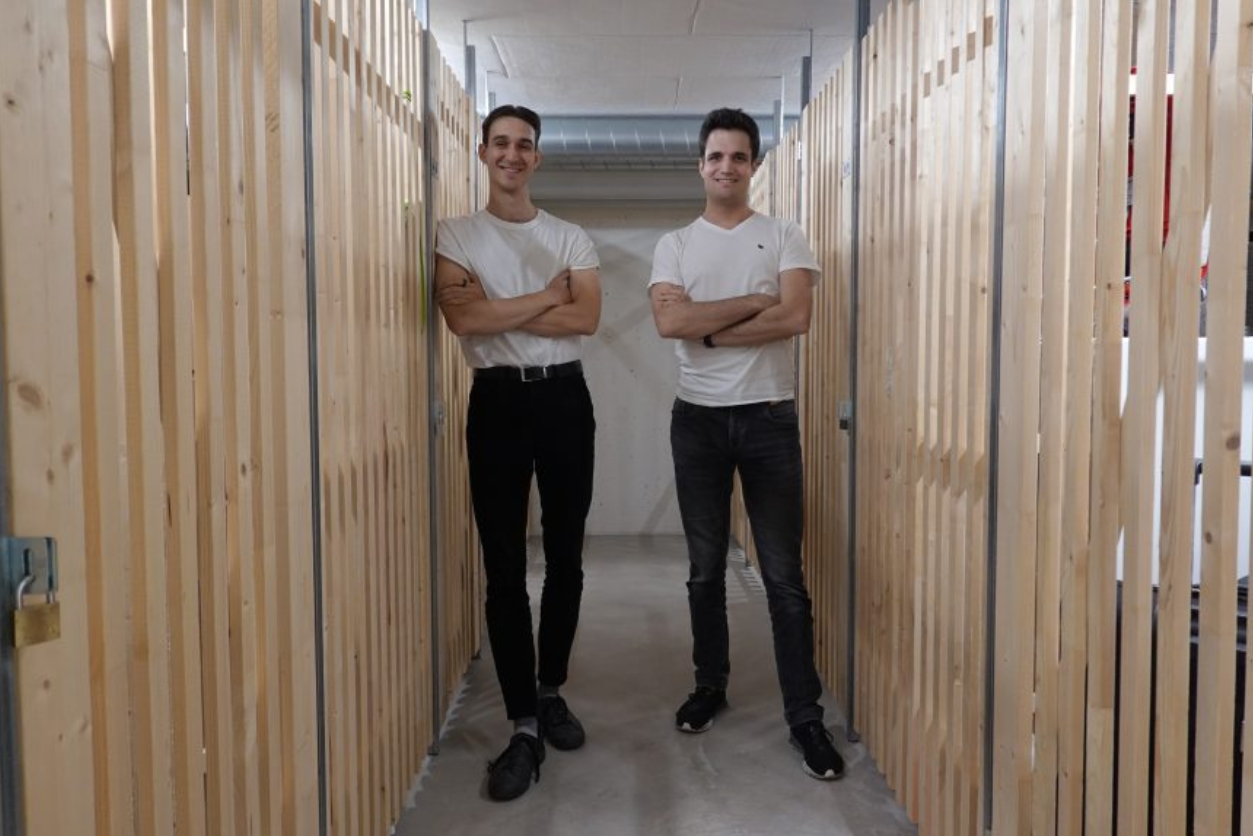
Startups.ch met with Isabel Bischof and Fabio Mätzler and asked them about bootstrapping, alternative funding options and the strategic decision to seek external capital. Here are their answers.
You bootstrapped Cohaga for six years. What does that actually mean?
For us, bootstrapping means: growth without external capital. In the first six years, we built Cohaga entirely from our own revenue – without investors, without large marketing budgets and without a financial safety net. Every decision had to work directly in the market. We couldn’t afford lengthy experiments, but were forced to develop a business model from the outset that created real customer value and generated revenue. The focus was consistently on sales, product-market fit (PMF) and sustainable growth.
The biggest advantage of this approach was our proximity to the market. We understood very early on how companies actually generate leads, where they fail and what really works. At the same time, bootstrapping also has clear limitations: growth is slower, resources are limited and, particularly in the tech and AI sectors, high initial costs are incurred.
What alternatives are there to bootstrapping?
Fundamentally, there are two main types of corporate financing: equity and debt. With equity, you give up shares in the company and receive capital in return, as well as often expertise and a network. A common early form is so-called ‘family and friends’ funding – that is, capital from people in your personal circle who believe in the founders and provide initial support.
This is followed by business angels – experienced entrepreneurs or investors who contribute not only money but also operational experience and contacts. Venture capital refers to investments by specialised funds that specifically target high-growth start-ups, usually with the aim of scaling them up quickly. Private equity, on the other hand, is frequently used for established companies and often involves sums in the millions.
In contrast, there is debt capital, i.e. traditional financing via banks or business loans. Here, you retain full control over the company, but must repay the capital and bear the entrepreneurial risk yourself.
Why did you initially opt for bootstrapping, and what were the pros and cons?
For us, bootstrapping was the right approach in the early stages. It allowed us to remain independent, build healthy growth and keep complexity to a minimum, as we didn’t have to manage investor reports or external expectations. The focus was clearly on genuine value creation rather than fundraising.
The main disadvantages were the limited pace of scaling and restricted resources in marketing, sales and product development. Particularly in the tech and AI sectors, it is challenging to keep up with financially powerful competitors without external capital.
Why did you decide to raise capital in 2026?
In March 2026, we deliberately took the next step and raised capital for the first time. After six years of bootstrapping, we brought two experienced business angels from the tech and SaaS sectors on board, who invested in Cohaga with a seven-figure sum. For us, it wasn’t just the capital that was decisive, but above all the experience, the network and the entrepreneurial mindset of these investors. At the same time, the collaboration is deliberately straightforward and on an equal footing, without rigid reporting structures. The additional capital enables us to invest specifically in growth, particularly in new products such as ranQ and in our position in the field of AI-based visibility.
Would you take this route again?
Yes. Bootstrapping forced us to build a solid foundation: a functioning business model, genuine customer focus and clear priorities. It is precisely this foundation that allows us today to use external funding in a targeted and strategic manner, rather than being dependent on it. Personally, I also think it’s healthiest when you can truly finance your business with your own hard-earned money and it isn’t artificially inflated. Once you’ve established that there’s genuine PMF, you can still fall back on external funding.
More about Cohaga
.gif)
More blog posts
In-depth insights, inspiring success stories and practical tips for entrepreneurs - discover more in our other articles.
Swiss proptech storabble expands to Spain with 48 AI agents
.jpg)
Starting a business is a gamble, but you can improve the odds.
.jpg)