
The path to funding
How to find the right investors, master due diligence and ultimately close the deal? Cohaga explains step by step the path to their first external financing round.

.gif)

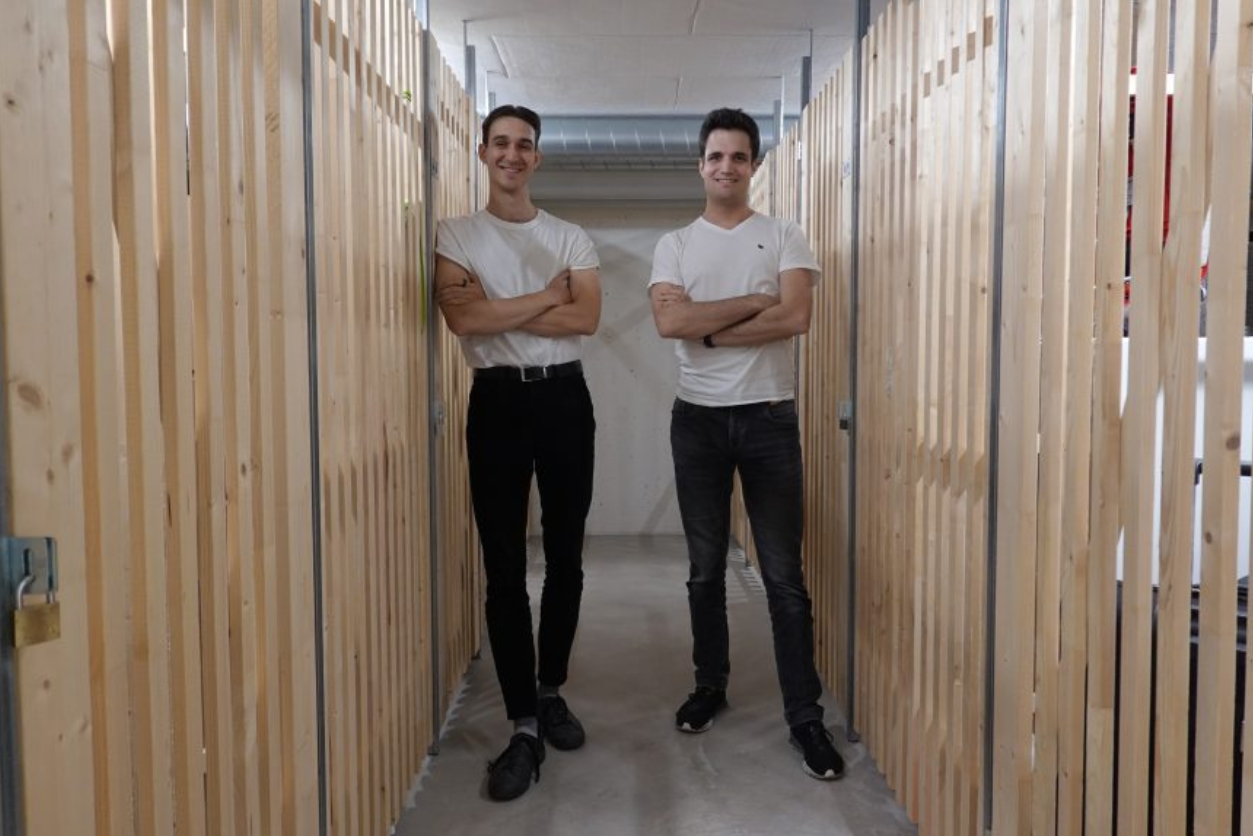
Startups.ch met with Isabel Bischof and Fabio Mätzler and asked them about their journey to securing funding, as well as the options available to start-ups today. Here are their answers.
What was your journey to securing funding like?
After several years of bootstrapping, we reached a point where we could make a conscious decision: did we want to continue growing organically – and thus steadily but slowly – or significantly increase our growth rate through additional capital? We opted for the latter. Not because we had to, but because a clear opportunity arose to bring new products to market faster and expand our strong market position.
The path to securing funding began in the traditional way: we actively identified and approached potential investors. Using our own data from Leadhub, we were able to create targeted lists of venture capital funds, private equity investors and family offices and contact them via cold outreach. At the same time, we devised creative approaches, such as directly approaching selected potential business angels – particularly entrepreneurs from exciting sectors – with an eye-catching physical mailing. One of our current investors became aware of us precisely through this method.
Once interest is shown, a structured process typically follows: after an initial meeting, investors are granted access to a data room containing key information, including annual financial statements from recent years, balance sheets, income statements, KPIs and existing contracts. This is followed by what is known as ‘light due diligence’, during which the financial metrics and the business model are reviewed based on the income statements provided in the data room. If interest remains, the contract negotiation phase follows. In this context, the company valuation, the level of equity stake, and key contractual terms such as liquidation preferences, tag-along rights and obligations are established.
What financing options do start-ups have today?
In principle, there are various ways to finance a company. Apart from bootstrapping (i.e. purely organic growth), the most common form is equity financing. This involves giving up shares in the company. Typical options include family and friends (capital from one’s personal network), business angels (experienced entrepreneurs with capital and expertise) and venture capital (funds that invest specifically in fast-growing start-ups). In later stages, private equity investors often come on board; they invest in established companies that typically already generate annual turnover in excess of 5 million Swiss francs.
In addition, there are alternative models such as strategic investors or revenue-based financing, where capital is repaid based on future revenue. Each of these options brings with it different expectations, dynamics and opportunities for influence.
How did the process go in Cohaga’s case – was it quick or protracted?
The process was definitely neither quick nor easy. The current market is rather cautious; there are fewer large funding rounds, fewer IPOs and, overall, a more cautious mood among investors. At the same time, there is a very large supply of start-ups. Investors see many pitch decks and are therefore highly selective.
This means: the process is intensive, sometimes protracted and involves a great deal of detailed work. Investors are committing significant sums at high risk and therefore want to understand exactly how the company operates, where it stands and where it is headed.
Why did it work out for you in the end?
A decisive factor was our strong starting position: we had already been in the market for six years, had proven our business model, remained consistently in the black and were never under financial pressure. So we weren’t reliant on capital, but specifically wanted to secure a partner to enable further growth. Furthermore, we had already achieved significant revenue entirely through bootstrapping. Over the years, we have impressively demonstrated our product-market fit (PMF) with top-tier clients – something many start-ups in early stages cannot yet demonstrate. Consequently, the risk is generally much higher in those cases.
Furthermore, our founding team was perceived as complementary, experienced and very rational in its decision-making. We not only had a vision, but also the ability to implement it operationally.
In the end, it was precisely this combination that proved decisive: genuine traction, a functioning business model and a team that investors trust to take the company to the next level.
More about Cohaga
.gif)
More blog posts
In-depth insights, inspiring success stories and practical tips for entrepreneurs - discover more in our other articles.
Swiss proptech storabble expands to Spain with 48 AI agents
.jpg)
Starting a business is a gamble, but you can improve the odds.
.jpg)